Industrial-grade RUSTOPAK® High Ratio Calcium Sulfonate Coating (RUSTOPAK®), Direct to Metal (DTM) One-Coat high performance anti-corrosion compound performs as a surface encapsulating sealant having an active electrochemical mechanism resulting in surface neutralization and passivation.
Since the 1980’s, the original compound
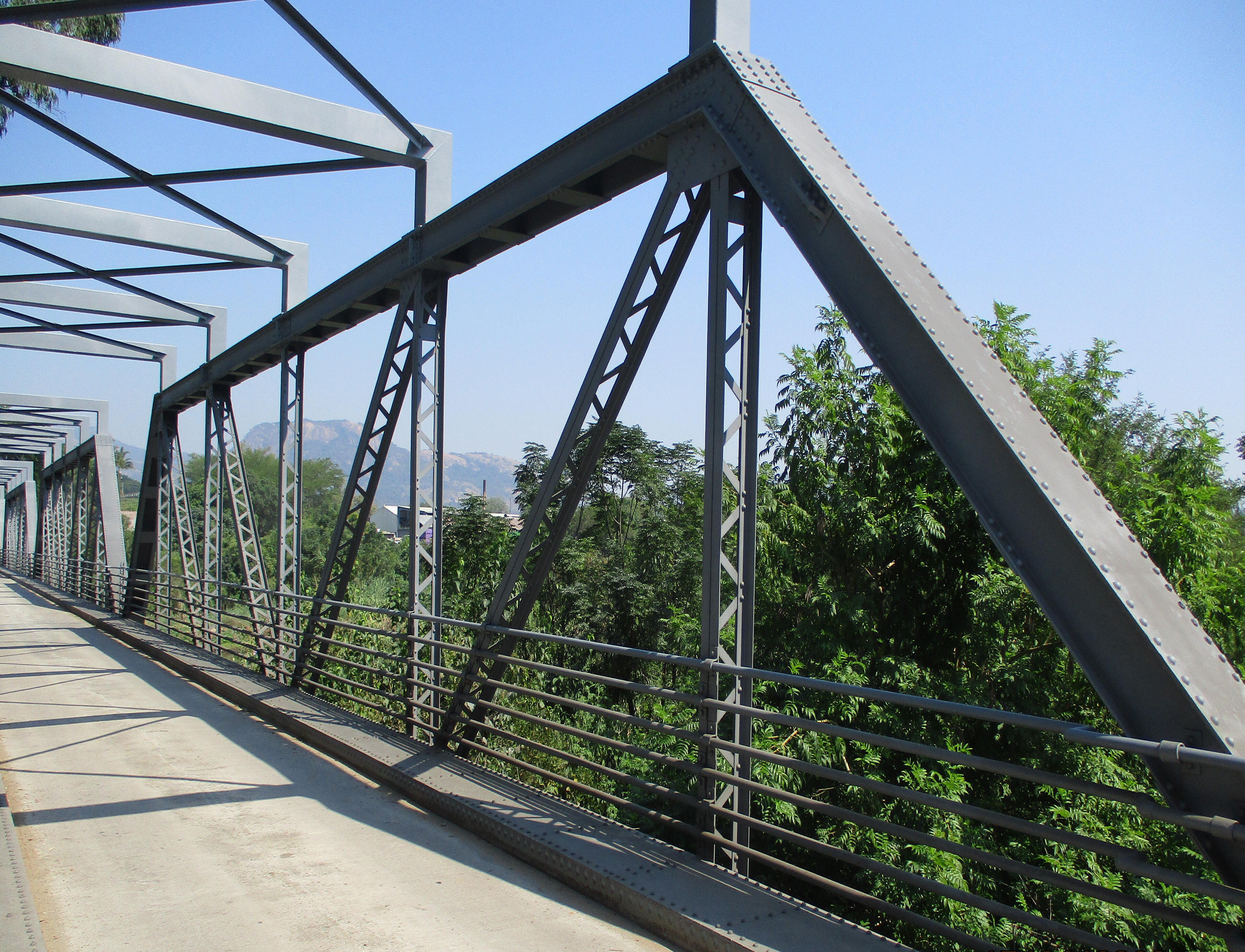
dedicated to bridge corrosion mitigation, offered the solution needed to substitute traditional surface preparation and multi-coating processes throughout the US.
Positioned as the top performing One-Coat Federal Highway Administration (FHWA)
tested product, RUSTOPAK® continues to provide the benefits of extreme corrosion control, self-healing, hydrophobicity and long term environmental endurance.
Utilizing an active Over-Based Sulfonate-Carbonate Complex with a dense alkaline core, incompatible with corrosion-cell formation, RUSTOPAK® constantly neutralises metal and zinc-bearing (hot dip galvanized) substrates to an alkaline species, pH ≥ 10.1 while establishing a strong co-ordinating bond through electrostatic attraction to metals, their oxides and the myriad of compounds that may be present.
The electro static mechanism eliminates mechanical interlocking (grit and sweep blasting) as a base requirement for adhesion, avoiding many application challenges. Surface pressure washing only requires less than one fifth of the pressure of an average car wash sprayer.
The RUSTOPAK® micro structure offers a viable and scalable high performance One-Coat application solution that encapsulates new and weathered surfaces being a simplified, cost-effective, time-efficient and environmentally friendly alternative to conventional primer/intermediate/topcoat configurations.
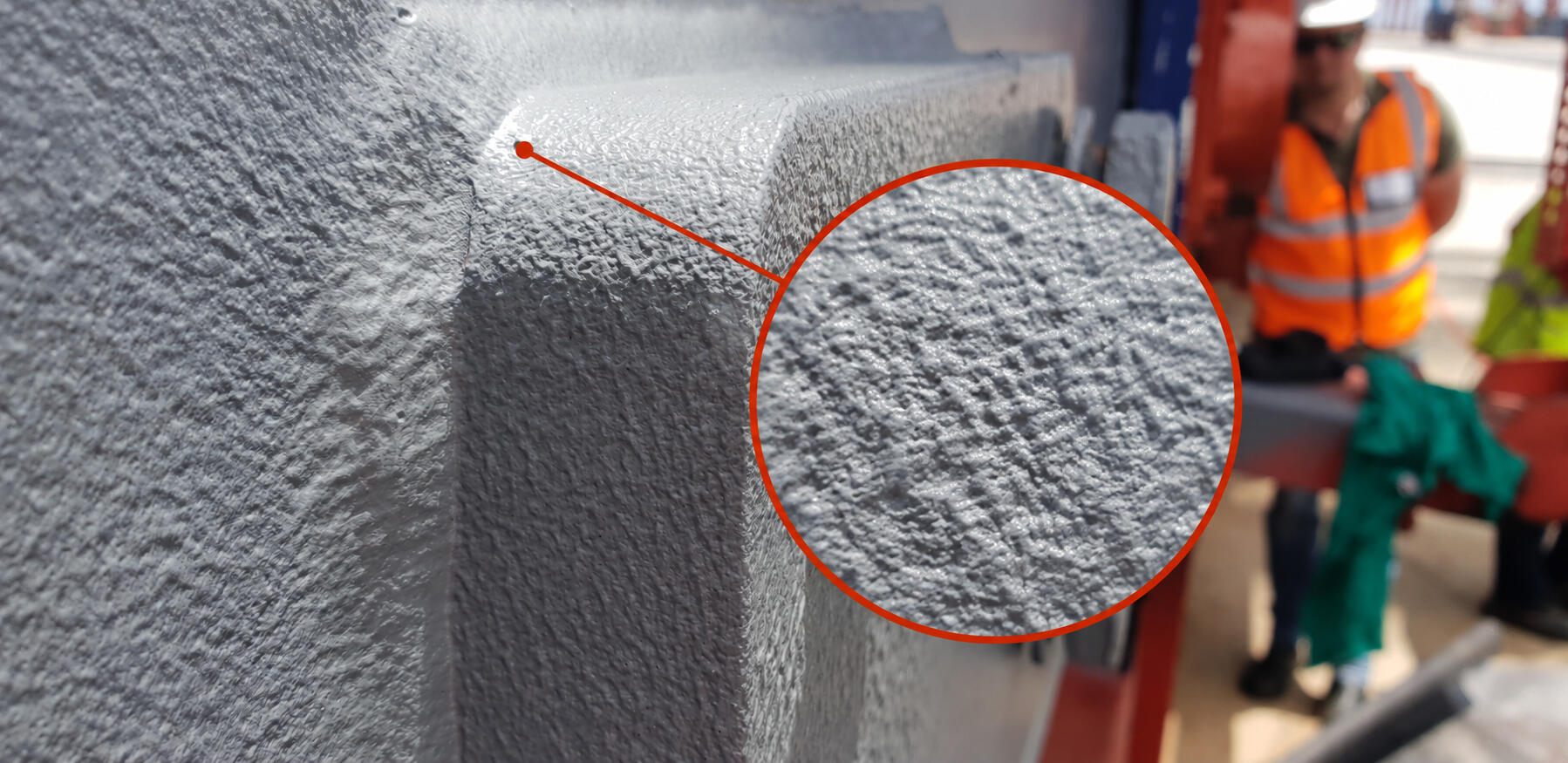
The highly thixotropic complex resists sagging, achieving high Wet Film Thickness (WFT) applications regardless of application orientation as a permanently hydrophobic formulation. RUSTOPAK® integrated proprietary UV protection technology, is specifically formulated to withstand extreme solar radiation parameters, ensuring long-term asset preservation.
Stops iron and zinc oxidation
Adheres & spreads onto surfaces
Continuously buffers the surface to alkaline range pH 10.1 (basic)
Forms impermeable Calcite crystals
Remains hydrophobic (water fearing)
Remains firm when cured
Continuous UV protection


The bonding mechanism of the direct to metal (DTM) One-Coat RUSTOPAK® results from the polar end of the sulfonate-carbonate complex, wetting and attaching to surfaces, demonstrating exceptional adhesion onto un-grit blasted surfaces. The bonding mechanism of other coating systems requires grit or sweep blasted profiles for mechanical interlocking needed for adhesion.
RUSTOPAK® actively seals off structures as the cured sealant remains hydrophobic and UV protected throughout the entire life cycle as a One-Coat DTM technology, excluding moisture, eliminating the formation of galvanic cells, passivating the steel interface preventing corrosion.
PRODUCT ATTRIBUTES
RUSTOPAK® is a highly engineered, a single component polymer architecture that chemically alters the interfacial environment to actively inhibit corrosion as an Over-Based Sulfonate-Carbonate Complex widely recognised as a high performance maintenance over-coat direct to metal (DTM), onto zinc bearing steel (Hot Dip Galvanizing), un-galvanised metal that is not corroding or with tightly adherent corrosion and tightly adherent weathered coatings (see specific coatings below) as a One-Coat high performance solution.
RUSTOPAK® data on product attributes, chemistry, and what you need to know about the what-when-where-how is provided.
PERMANENT HYDROPHOBICITY
The direct to metal (DTM) One-Coat cured product remains Hydrophobic minimizing the contact area with water, resulting from the chemical structure of over-based gelled calcium sulfonate platelets contained throughout the product, sealing surfaces from moisture, oxygen and carbon dioxide, stopping the electrochemical reaction process.
The polar end of the sulfonate-carbonate complex attaches to metallic substrates, forming a coordinating bond, demonstrating exceptional adhesion and the ability to properly “wet out” surfaces and displace moisture throughout the product’s entire life cycle to mitigate corrosion.
Recommended 340 µm dry film thickness (DFT) ensuring an estimated 27 years of hydrophobic protection in the coastal zone naturally erodes at an estimated 13 µm DFT per year. Once the DFT of 170 µm is measured after 13 years, adjustment of DFT by over-coating is a simple process to restore the hydrophobic DFT to the original 27 years of protection.
VAN DER WAALS FORCESThe direct to metal (DTM) product, due to van der Waals forces has a greater attraction to metal than water, as its primary method of adhesion, not requiring grit or sweep blasting for mechanical interlocking adhesion to metal surfaces before coating. Modified calcium sulfonate/carbonate complexes obtain adhesion through charge attraction. The positively charged calcium and double bonded oxygen’s have a strong affinity for the negatively charged metal surfaces, a different adhesion mechanism to conventional coating systems that obtain adhesion through hydroxyl, carboxyl and epoxide groups which usually requires a substrate profile achieved by grit or sweep blasting. The modified calcium sulfonate system is not affected by the ions generated during the corrosion process that normally causes undercutting.
In molecular physics, the van der Waals forces are distance-dependent interactions between atoms or molecules. Unlike ionic or covalent bonds, these attractions are not a result of any chemical electronic bond and they are comparatively weak and more susceptible to being disturbed. Van der Waals forces quickly vanish at longer distances between interacting molecules. Van der Waals forces also define many properties of organic compounds and molecular solids, including their solubility in polar and non-polar media.
NON-CONDUCTIVEThe high film build coating (HBC) is non-conductive, blocking the electrical connection between metallic surfaces which are in direct contact, stopping galvanic corrosion. When weathered structural joints are sealed off with the low viscous calcium sulfonate penetrant sealant as the primary application before the remainder of the structures are sealed off with the Top Coat, no corrosion damage will continue in localized, often moist or wet micro environments where the serious concern of galvanic corrosion poses the highest threat to structural integrity. RUSTOPAK® addresses these localized areas on steel structures, ensuring that rust stops where it starts.
The thixotropic attribute of the non-conductive Top Coat, results in the direct to metal (DTM) One-Coat high film build application onto vertical surfaces with no sagging at recommended wet film thicknesses (WFT), surpasses the WFT of conventional multi-coat systems. The result of maximum specified WFT with no curing concern for solvent entrapment or mud cracking produces a high film build sealant, extending the life cycle of non-conductive corrosion protection.
THIXOTROPY EXPLAINEDThixotropy is a time-dependent shear thinning property. Certain gels or fluids that are thick, or viscous, under static conditions will flow (become thin, less viscous) over time when shaken, agitated, sheared or otherwise stressed (time dependent viscosity). They then take a fixed time to return to a more viscous state. Many gels and colloids are thixotropic materials, exhibiting a stable form at rest but becoming fluid when agitated. In many cases it is desirable for the fluid to flow sufficiently to form a uniform layer, then to resist further flow, thereby preventing sagging on a vertical surface.
PREVENT OXIDATIONOxygen cannot pass through the product due to the parallel alignment of insoluble calcite platelets that create a long path to the metal surfaces through the high film build coating.
INTERFACIAL ENVIRONMENTAL MODIFICATIONThe direct to metal (DTM) One-Coat RUSTOPAK® product causes a chemical neutralization reaction between the mild sulfonic acids (RSO3H) in the formulation and the zinc carbonate (ZnCO3) layer present on galvanized surfaces, producing a robust, integrated zinc sulfonate matrix. This neutralization bond, combined with the dense alkaline core of the overbased complex, permanently raises the local interfacial environment to an alkaline pH ≥ 10.1. Because industrial steel corrosion cells require an acidic environment to thrive, this sustained alkaline shift renders the environment thermodynamically hostile to corrosion effectively inhibiting the formation of corrosion, arresting zinc and iron oxidation and sub-film under-creep.
PERMANENT FIRM FINISHThe hydrophobic product cures to a firm finish (ASTM D3363) of 5B Pencil Hardness and passes the (ASTM D522) 180° Mandrel Bend Test. Because of the product’s engineered purpose as a bridge sealant, the cured product maintains permanently firm, enabling it to accommodate the Linear Coefficient of Thermal Expansion (LCTE) of the underlying steel substrate during extreme thermal fluctuations without experiencing embrittlement, micro-cracking, or delamination at structural connections.
PRODUCT CHEMISTRY
GELLED CALCIUM SULFONATE CHEMISTRYThixotropic over-based and gelled calcium sulfonates are produced in a series of chemical reactions. Sulfonic acid is formed by reacting with an alkyl benzene compound with sulphur trioxide. This process is called sulfonation.
NEUTRALIZATION AND OVER-BASINGSulfonic Acid is then converted into the Sulfonate-Carbonate complex by neutralizing the Sulfonic Acid and reacting with the metal salt with an excess of calcium hydroxide and calcium oxide to form the over-based complex.
CARBONATE MODIFICATIONThis step converts the small amorphous carbonate particle structure (9 μm average) to a large particle size calcite crystal (200-250 μm average). This calcite structure imparts thixotropic viscosity characteristics to calcium sulfonate.
OVER-BASED CALCIUM SULFONATE-CALCIUM CARBONATE COMPLEXThis complex is dispersed in Mineral Turpentine/Spirits and exhibits a variety of properties, which relate to the chemical structure of over-based gelled calcium sulfonate. These include hydrophobicity due to platelet formation, polarity and corrosion inhibition. The calcium sulfonate resin provides the excellent corrosion resistance, water resistance, adhesion to bare metal and hot dip galvanized steel.
PLATELET STRUCTUREThe size and shape of the calcium carbonate particle is controlled during synthesis to form the platelet structure. These flat platelets form a barrier to air, moisture, and carbon dioxide to reach the metal surface, thereby stopping the electrochemical reaction process and thus preventing corrosion.
Once the modified calcium sulfonates have “plated out” with their charged groups toward the metal they orient a very hydrophobic hydrocarbon chain structure outward. This environment prevents water from reaching as the calcite platelets increase the path length that oxygen or water would need to take to reach the metal substrate metal, eliminating the development of corrosion. This situation is further augmented by the materials that would form the matrix between the platelets (wax, OXPET), which are also hydrophobic.
HYDROPHOBICITYAlkyl groups attached to the aromatic ring face away from the substrate and repel moisture. These mostly saturated aliphatic chains are completely nonpolar. The complex being polar on one end and nonpolar on the other end makes hydrophobic compounds like waxes and oxidative petrolatum’s compatible coating formulations.
POLARITYThe polarity of the aromatic ring and attached sulfonate (SO3) group results in a product with superb metal wetting and moisture displacement properties. The polar end of the sulfonate/carbonate complex attaches to metallic substrates and demonstrates exceptional adhesion even when the film is damaged. Very thin films of only a few mils (1 mil = 25.4 µm) can offer up to 1,000 hours of protection in the ASTM B 117 Salt Fog Test. The moisture displacement property allows the application of the product in less than optimal conditions.
CORROSION INHIBITIONThe calcium carbonate (CaCO3) part of the complex functions primarily as an alkalinity reserve. The carbonate is slightly soluble in water and acts as a corrosion inhibitor by buffering the pH at the local metal interfacial environment/surface. A pH of approximately 10.0 can be maintained at the coating/metal interface, which delays the initiation of the corrosion process and this further aids in under cutting (undercreepage) prevention.
RUSTOPAK® YOU NEED TO KNOW
WHAT RUSTOPAK® CAN BE APPLIED TO
RUSTOPAK® WEATHERED SURFACE PREPARATION GUIDE - PHASE #01 COATING ADHESION TESTExisting coating adhesion testing is a vital hold point that must be inspected during the sample application process needed to assess the surface preparation requirements and during the surface preparation phase to confirm that surfaces meet the ASTM D3359 Standard before application can commence. Coating adhesion testing by means of visual comparison method for paint and powder coatings up to a thickness of 250 micron (μm) DFT by cutting small squares into the existing coating, thereby reducing lateral bonding and the adhesion assessed against ISO, ASTM D3359 Standard or Corporate Standards using pressure-sensitive tape on metallic substrates via X-cut such as Elcometer 99 Adhesive Tape and inspected by a qualified coating Inspector or Supervisor. Results must be attached to the relevant inspection Certificate. Readings submitted on www.rustopak.com.
RUSTOPAK® may not be applied to existing coating that has coating removed between classifications 0B - 2B level on the ASTM D3359 Standard. Refer to the following pictorial reference to the standards.
RUSTOPAK® WEATHERED SURFACE PREPARATION GUIDE - PHASE #02 PARTICLE TESTSurface cleanliness testing is a vital hold point that must be inspected during the sample application process needed to assess the surface preparation requirements and during the surface preparation phase to confirm that surfaces meet the ISO 8502 - 3 Standard before application can commence. Surfaces must be clean and dry. No oily residue, loose corrosion, dust or plant material may be left on surfaces to be coated. Surface particle testing is a hold point that must be inspected in accordance with ISO 8502 – 3 Standard using Dust Test Kits such as Elcometer 142 ISO 8502-3, inspected by a qualified coating Inspector or Supervisor. Results must be attached to the relevant inspection Certificate. Readings submitted on www.rustopak.com.
RUSTOPAK® may not be must be applied to surfaces with particle readings between 1 - 3 on the ISO 8502 – 3 Standard. Refer to the following pictorial reference to the standards.
RUSTOPAK® WEATHERED SURFACE PREPARATION GUIDE - PHASE #03 SURFACE PREPARATIONSurface preparation is a vital hold point that must be inspected by a qualified coating Inspector or Supervisor according to the D3359 Standard for coating adhesion and ISO 8502 – 3 Standard for particle measurements guidelines provided and approved of before commencement to the Surface Moisture Control phase of the RUSTOPAK® Weathered Surface Preparation Guide. Readings submitted on www.rustopak.com.
SSPC-SP 1 (Solvent Cleaning) surface preparation standard for removing all visible oil, grease, soil, drawing compounds, and other soluble contaminants from steel surfaces before coating or further preparation by mechanical cleaning or abrasive blasting to prevent spreading contaminants.
SSPC-SP2 (Hand Tool Cleaning) surface preparation standard for steel that requires the removal of all loose rust, mill scale, and coating, along with other detrimental foreign matter, using non-power hand tools such as scrapers, wire brushes, and sandpaper. This standard does not require the removal of tightly adherent rust and firmly adherent coatings.
SSPC-SP3 (Power Tool Cleaning) surface preparation standard to remove loose rust, mill scale, and coating from metal surfaces using power-assisted tools (grinders, sanders, needle guns). This standard does not require the removal of tightly adherent rust and firmly adherent coatings.
SSPC-SP 6 (Commercial Grit Blast Cleaning) surface preparation standard to remove all visible oil, grease, dirt, dust, mill scale, rust, and old coating, allowing for a maximum of 33% light staining, shadows, or streaks per unit area.
SURFACE MOISTURE CONTROLSurface moisture control is a vital hold point that must be inspected by a qualified coating Inspector or Supervisor. High Ratio Calcium Sulfonate is highly hydrophobic and all joints and external surfaces must be totally dry before application can commence. Direct the use of compressed air firstly in areas where moisture entrapment is possible such as joints. Thereafter, direct the compressed air to surrounding external surfaces.
It is the responsibility of the project Manager to identify areas that need specific attention where possible moisture entrapment has taken place. The practical removal of all entrapped and surface moisture from the top-down while ensuring that the surrounding surfaces are protected, needs to be co-ordinated. Ensure that no runoff of moisture that will include residual loose particles land up on newly coated surfaces. The use of compressed air as the second function is to remove all loose particles before final surface cleanliness inspection is done. Readings submitted on www.rustopak.com.
CHLORIDE TESTSurface chloride testing is a vital hold point that must be inspected by a qualified coating Inspector or Supervisor using Chloride Test kits such as Hach Quantab Titrators with readings not higher than 70μg/cm2 or 70mg/m2 r. Results must be attached to the relevant inspection Certificate. Photos must be taken of the titrators immediately after the completion of each certificate. RUSTOPAK® may not be applied to surfaces that have salt readings that are higher than 70µg/cm2 or 70mg/m2. Readings submitted on www.rustopak.com
WHEN CAN RUSTOPAK® BE APPLIED
RAINWhen there is no rain anticipated for the day of application. Apply when surfaces are totally dry.
WINDThe wind velocity must be low when spray applying. If the velocity of the wind is too high, switch to roller or brush application. Overspray must be contained with suitable protection such as wind fencing, tarps and drop out sheeting. If there is any overspray on equipment not specified to be coated, it is the applicator’s responsibility to remove all overspray. If this occurs, use mineral turpentine and clean cloth.
TEMPERATURESurface temperatures between -7° C and 54° C can be coated and the dew point may not be less than 3° C differences between the ambient and the surfaces temperatures. If it is less than 3° C, condensation will form on the surface of the substrate. For the application of the coating the surfaces must be totally dry. Climatic reading is a hold point that must be inspected by a qualified coating inspector or supervisor using appropriate equipment such as a Dew Point Meter. Readings of climatic conditions submitted on www.rustopak.com.
WHERE CAN RUSTOPAK® BE APPLIED
RUSTOPAK® Penetrant (Aerosol) - Used for superior wetting into high corrosion areas or inaccessible areas where crevice corrosion occurs such as splice plates, rockers, box construction design and pack rust. No more dismantling and re-assembling of components is required. RUSTOPAK® Penetrant (Aerosol) is a low VOC penetrating liquid used in conjunction with RUSTOPAK® Top Coat. It is a single component system specifically formulated to be applied as an over coat of surfaces with tightly adherent rust and also hard to reach areas such as crevices.
RUSTOPAK® Top Coat - A low Volatile Organic Compound (VOC), over-coat direct to metal (DTM) onto zinc bearing steel (Hot Dip Galvanizing), un-galvanised metal that is not corroding or with tightly adherent corrosion and tightly adherent weather coatings (see specific coatings below) as a One-Coat high performance solution.
Tightly adhered rust on structural steel must be without contaminants such as oil, grease, salt, etc. It is a single component, specifically formulated active sealant system. RUSTOPAK® Top Coat is over coated onto RUSTOPAK® Penetrant (Aerosol) as a wet-on-wet application.
HOW RUSTOPAK® IS APPLIED
Apply by brush when spray application would pose site challenges due to equipment set up, overspray or other indeterminate reasons.
The recommended application method for RUSTOPAK® Top Coat is a single application system applied at recommended 600 µm wet film thickness (WFT) or as specified by DFT requirements. WFT reading is a hold point that must be inspected by a qualified coating inspector or supervisor using WFT combs. Readings submitted on www.rustopak.com.
It is pertinent for Technicians to account for surface temperature fluctuations with the guideline that the application window between 11:00 AM and 15:00 PM may not be optimal to achieve the One-Coat process requiring the instructions to move over to the wet-on-wet application procedure.
Where two coats of the RUSTOPAK® Top Coat are required to achieve the specified WTF / DFT, it is important to apply both coats wet-on-wet i.e. apply the first coat and the second coat within a 2 to 4 hour window @ 25⁰ C using approved synthetic long bristle application brushes or airless spraying equipment.
Apply the RUSTOPAK® Top Coat to jointed areas first using clean/new approved synthetic long bristle application brushes. The correct technique of application is to fully saturate the brushes with the thixotropic product, apply the product with the bristles facing downwards, transferring the product onto the surface/s from the side of the brush face. This method allows maximum product discharge onto the surfaces with one pass of the brush.
Airless Spray: 30:1 Graco Bulldog with 9.5 mm ID high pressure line and a Graco Silver Gun with a 0.43 to 0.53 mm spray tip or similar. Note: Brush or roller application is recommended for jointed areas and ease of application.
May be applied to surfaces and in ambient temperatures down to -17.7 °C provided there is no visible condensation or ice present.
The material temperature prior to being applied must be elevated to achieve a workable viscosity. This temperature may be higher than the minimum recommendations of 1.6 to 7.2° C based on equipment, desired working times and ambient conditions.
Ambient temperatures must remain at least 3 °C above the Dew Point and rising during application.
Material should not be applied when the relative humidity exceeds 90% (RH > 90%) or the substrate temperature is higher than 53 °C. Surface particle reading must be between 1 and 3.
Maximum surface salt level must be less than 70 mg/m2.
This guide is generated to assist with on-site corrosion mitigation assessments and coating selection strategies. The forms and causes of corrosion are included for the purpose of identification only.
Corrosion is a naturally occurring phenomenon commonly defined as the deterioration of a substance (usually a metal) or its properties because of a reaction with its environment. The tendency of a metal to corrode depends on the grain structure of the metal, its composition as formed during alloying, and the temperature or deformation of a single metal surface developed during fabrication.
Corrosion occurs as a result of an electrochemical reaction driven by a potential difference between two electrodes, an anode and a cathode, connected by an electronic path and immersed in the same electrolyte. In the case of uniform corrosion, a multitude of microscopic anodic and cathodic sites exist on the surface of the metal structure.
THERMODYNAMIC INSTABILITYThe thermodynamic instability of metals drives corrosion. Metals exist in nature as stable, low-energy ores. Extracting them requires energy, leaving them in a high-energy, unstable state. To lower this energy, metals spontaneously react with their environment to form compounds. This process requires a corrosion cell.
THE PROCESS
Iron atoms (Fe) [Anode] oxidize on the surface of steel, passing two electrons forming ferrous ions (Fe2+) to oxygen (O2) and moisture (H2O),forming hydroxide ions (OH-) which combines to form iron hydroxide (Fe(OH)2),further oxidized by oxygen producing hydrated iron oxide (Fe2 O3 . H2O).
CORROSION CELLCorrosion cells on a metal surface is the flow of electric current that occurs between the metal surface and an electrolyte with which it is in contact, sufficient to cause the metal to degrade. Coating films can be used to control one of these elements - the electrolyte. Applying protective films over the surface of the metal and isolating those points with different potential (anode and cathode) controls corrosion.
Corrosion cells can be created through
Electrolysis
Oxygen concentration cells
Galvanic action
The driving force behind a corrosion cell is a potential or voltage difference between the anode and cathode (two or more metals) where the surfaces are in direct contact. A corrosion cell consists of four fundamental element that affect the severity of corrosion
Anode
Cathode
Conducting environment for ionic movement (electrolyte)
Electrical connection between the anode and cathode for the flow of current
Corrosion cells develop on the molecular scale. These cells are usually produced by three factors
Irregularities in the metal's surface produced by the original metalworking/forming or extruding
Differences in the composition of the metal's surface pressed into the surface by shaping/rolling or finishing operations
Stresses induced from forming, welding, etc.
FORMS OF CORROSION
GALVANIC CORROSIONWhen two metals of different electrochemical potential are electrically connected and wetted, the more active (less noble) metal becomes the anode and corrodes preferentially, while the more noble metal is protected as the cathode. The driving force is the potential difference read from the galvanic series.
With industrial structures the classic case is a stainless-steel bolt, washer or bracket fastened into galvanized carbon steel. The large cathodic stainless area coupled to a small anodic zinc/steel area produces an unfavourable area ratio and a concentrated corrosion ring around the fastener — exactly where clamping force and seal integrity matter most.
Mitigation: keep the cathode-to-anode area ratio small, electrically isolate with non-conductive gaskets and washers, specify compatible metals close together on the galvanic series, and seal the joint to exclude the electrolyte.
DIFFERENTIAL AERATION CORROSIONDifferential aeration corrosion is a type of corrosion that occurs when oxygen concentrations vary across a metal's surface. The varying concentration of oxygen creates an anode and a cathode on the metal's surface. Oxidation then occurs because an anode and a cathode have been established on the surface. In differential aeration corrosion, the area with the higher oxygen concentration becomes the cathode. The area with the lower oxygen concentration becomes the anode.
Consequently, the portion of the metal that has the lower oxygen concentration is the portion subject to corrosion. Some examples where varying concentrations of oxygen may be found are metals that are buried, certain joint types, crevices and cracks. Metals that are partially submerged in water are also subject to differential aeration corrosion because the oxygen concentration in the water is typically different from the oxygen concentration in the atmosphere.
CREVICE CORROSIONA typical description of crevice corrosion refers to the attack of metal surfaces that are in contact with each other where stagnant water conditions can contribute to the corrosion in the crevice, for example around the edges of nuts and rivet heads. When dust, sand and other corrosive substances are deposited on surfaces, they create an environment where water will accumulate and corrode the metal part. It can happen between two metals or between a metal and a non-metal. This causes damage to the metallic part, which is initiated by the concentration gradient in chemicals. Oxygen causes an electrochemical concentration cell inside the crevice. This is a differential aeration cell where the oxygen in the crevice (the anode), and the oxygen content decreases, lowering the pH making the micro-environment more acidic.
For chlorides, the electrochemical concentration is higher on the inside of cervices, which worsens the corrosion. When a ferrous metal is present, the ferrous ions react with the chlorides to form ferric chloride, which attacks the steel and in particular stainless steel. This makes the concentration of both the oxygen and the pH remains lower in the crevice than the concentration in the water solution that forms on the metal. The propagation mechanism is similar to that of pitting corrosion.
There are factors that influence crevice corrosion. These include
Type of crevice - either metal to metal or metal to non-metal
Geometry of the crevice - The size of the gap, its depth and the surface roughness
Composition of the metal - The structure of the alloy composition and can be Cr, Mo, or other metals
Environment - The pH, halide ions, temperature, oxygen, chloride levels and Relative Humidity (RH)
The resistance of a material to crevice corrosion can be ranked and evaluated by its critical crevice temperature (CCT), but this has to be in accordance with the ASTM Standard G48-03. CCT is the minimum temperature in °C that can produce a crevice attack, and is found to be lower than the critical pitting temperature (CPT).
How can crevice corrosion be prevented?
Replace riveted joints with welded butt joints
Eliminate crevices in lap joints through continuous welding and soldering
Drain existing solutions on surfaces and avoid creating stagnant conditions
Use solid and non-absorbent gaskets
Use higher alloys
Seal off the crevice with an “active seal” coating to prevent moisture and oxygen ingress
INTERGRANULAR CORROSIONThis is a corrosion type that attacks the boundaries of the metal crystallites, as opposed to attacking the surface of the metal. Intergranular corrosion can also be referred to as intergranular attack under a condition known as grain boundary depletion.
Metals and alloys, like other elements, have micro-structures that can be described as grains. Metals can contain multiple grains, and these are separated by a grain boundary. Intergranular corrosion can be defined as an attack along the boundaries of several grains in the metal or near the grain boundary with the largest portion of the grain remaining unaffected.
The relation of corrosion to the grains can be explained in terms of element segregation. When an element adequate for the resistance of corrosion is lost, either from the boundary or the zone adjacent to it, it creates a condition where the spot becomes an anode with reference to the rest of the grain. Corrosion then proceeds along the affected grain boundary and may cause grains to dislodge due to the boundary deterioration.
Stainless steels and weld decay sensitization are the best examples of intergranular corrosion. Grain boundaries that are rich in chromium elements will precipitate lead. This makes the boundaries very vulnerable to corrosion attacks in various electrolytes. This is caused by reheating the part that has been welded, especially in multi-pass welding.
In the process of intergranular corrosion, a knife-like attack, a form of intergranular corrosion, can occur when carbon reacts with niobium, titanium or the austenitic stainless steels. Carbides form in the areas close the welded part, making it difficult for them to diffuse. This condition can be corrected by reheating the part to enable the carbides to diffuse.
Aluminium-base alloys are mostly affected by this corrosion due to two main reasons. The first is when the phases anodic to aluminium are along the grain boundaries. The second is due to the depleted parts of copper which are adjacent to the boundaries. Other alloys that are prone to intergranular corrosion are those that have elongated and flattened grain micro-structures. These are the heavily worked on alloys or those that have been extruded.
PITTING CORROSIONPitting is a type of corrosion that occurs in materials that have protective films. It is an attack with localized holes on the metal's surface. The attack can penetrate the metal very rapidly, while some parts of the metal surface remain free from corrosion.
Pitting is vigorous when the solution on the metal surface contains chloride, hypochlorite or bromide ions. Other harmful solutions are those that contain fluorides and iodides, while sulfides (USA) and water are known to enhance the pitting process.
When metal is exposed, its available electrons are given up, and thus tiny pits begin to form on the metal surface. This then grows to become a rapid attack that results in massive damage of the metal. The oxidizing cation of iron, copper and mercury, among others, enables the formation of pitting even when there is no supply of oxygen in the metal surface. Stainless steel, chromium, passive iron, cobalt, aluminium, copper and associated alloys are all prone to pitting corrosion.
A tubercular morphology can be seen where pits develop. Pitting is not always local in nature, as even when intrinsic defects in the solution-metal interface, the potential nuclei remains intact. Their development and stabilization show a random nature, and galvanic coupling established in the zones of discontinuity where metal dissolution occurs, lead to the formation of small anodes.
Pitting corrosion can be controlled by
Use of a more resistant material
Ensuring that the fluids in contact with the material are either washed away or are injected at a high velocity
Reducing the medium's aggressiveness
Use of cathodic protection
Avoiding stagnant zones
Use of appropriate materials for service conditions
Proper use of inhibitors or control of fluid chemistry
Use of a coating sealant that will prevent pitting on metal surfaces
The ability to maintain the protective film of the same material
FRETTING CORROSIONFretting is gradual wear by means of rubbing or gnawing action between two surfaces. Fretting corrosion is a combined action of fretting as well as corrosion, which involves corrosion at points where two metal surfaces make contact by means of a rubbing action. Fretting corrosion is also known as chafing corrosion.
For fretting corrosion to occur, the following conditions need to be satisfied
Interface must be under load
Relative motion must occur and should be sufficient enough to produce deformation on the surface
Fretting corrosion is common in
Riveted joints/structures
Bolted joints/flanges
Problems generated by means of fretting corrosion are very expensive to fix. There is no standard test method to identify fretting corrosion. Mechanical design plays a more important role than material selection when facing this kind of corrosion. While it cannot be eliminated completely, it can be reduced by using inhibitive caulking compounds in the joints. The use of an “active” penetrant based on calcium sulfonate in joints will inhibit corrosion.
Fretting corrosion can be prevented by
Reducing relative movement between materials
Using materials that are not susceptible to fretting corrosion
Increasing the hardness of one or both materials
Using contact lubricants
Using seals to absorb vibrations
Using an “active” seal such as High Ratio Calcium Sulfonate which can accommodate the movement
STRESS CORROSIONStress corrosion refers to the degradation and/or rust formation of a given metal surface in an electrochemical fluid environment due to the metal being subjected to tensile forces in residual or direct form.
Stress corrosion erodes the microscopic granular composition of a metal surface, often causing the surface to crack and disintegrate due to significant tensile stresses.
Metal modification processes such as welding, cold or hot bending, machining, or grinding can create residual stresses in a metal, which accelerate stress corrosion. Certain metals such as stainless steel, carbon steel and copper alloys are more prone to stress corrosion in corresponding electrochemical environments.
TERMS AND CONDITIONS OF USE AND SALE
Last Updated: April 2026
1. Introduction
The website rustopak.com (the "Site") is owned and operated by Afrisun-CE (Pty) Ltd (referred to herein as "Afrisun-CE", "the Company", "we", "us", or "our"), a private company registered in accordance with the laws of the Republic of South Africa. By accessing or using the Site, or by purchasing products from us, you agree to be bound by these Terms and Conditions ("Terms"). These Terms constitute a binding legal agreement between you and Afrisun-CE.
2. Acceptance of Terms
By using this website, you signify your acceptance of these Terms. If you do not agree to these Terms, please do not use our website. We reserve the right to modify these Terms at any time without prior notice. Continued use of the site following any changes constitutes your acceptance of the revised Terms.
3. Privacy and POPIA Compliance
Afrisun-CE is committed to protecting your privacy in accordance with the Protection of Personal Information Act, 2013 ("POPIA").
3.1 Data Collection: We collect personal information necessary for the processing of orders and the improvement of our services.
3.2 Confidentiality Guarantee: We will not disclose, share, sell, or rent your personal information to any third party for marketing or any other purposes. Access to your data is strictly limited to our internal staff for order fulfillment.
3.3 Legal Disclosure: No third-party disclosures of your personal information will be made unless we are served with a valid court order issued by a competent court within the South African jurisdiction, or if such disclosure is strictly required by law.
4. Transactions and Payment Handling
All transactions are processed in South African Rand (ZAR). Afrisun-CE offers two primary methods of payment:
4.1 Payfast.io: Credit card and instant EFT transactions are processed securely through Payfast.io. Payfast is a PCI-DSS Level 1 Service Provider. Afrisun-CE does not store your credit card or sensitive financial details on our servers. All such data is handled by the Payfast secure payment gateway.
4.2 Electronic Funds Transfer (EFT): If you select payment via manual EFT, our banking details will be provided at checkout. Orders will only be processed and dispatched once the funds have cleared in our bank account and reflect as available. Proof of payment must be emailed to the address specified during the checkout process.
5. Delivery and Shipping
5.1. Delivery times are estimates and may vary based on location and courier availability.
5.2. Risk of loss or damage to products passes to you upon delivery to the address provided during checkout.
5.3. We deliver within the borders of South Africa only, unless otherwise agreed upon in writing.
6. Returns and Refunds
Our returns policy is governed by the Consumer Protection Act, 2008 ("CPA"). If a product is defective or does not match the description, you may return it within the legally prescribed timeframe for a repair, replacement, or refund, subject to our inspection of the goods.
7. Intellectual Property
All content on rustopak.com, including text, graphics, logos, and images, is the property of Afrisun-CE or its content suppliers and is protected by South African and international intellectual property laws.
8. Limitation of Liability
To the fullest extent permitted by law, Afrisun-CE shall not be liable for any direct, indirect, incidental, or consequential damages arising out of your use of the Site or the purchase of any products. Our liability is limited to the purchase price of the specific product in question.
9. Governing Law and Jurisdiction
These Terms and Conditions shall be governed by and construed in accordance with the laws of the Republic of South Africa. You agree to submit to the exclusive jurisdiction of the South African courts for any dispute arising out of or in connection with these Terms.
10. Contact and Company Details
Entity: Afrisun-CE (Pty) Ltd
Registration Number: 2012/127926/07
Website: rustopak.com
Contact Email: [email protected]
Domicilium Citandi et Executandi: Centurion, Gauteng, South Africa
<script type="text/javascript" src="https://form.jotform.com/jsform/260630577458060"></script>
Second item
Third item
Electrochemical Impedance Spectroscopy (EIS) is a non-destructive, in-situ technique used to characterize corrosion by measuring the electrical impedance of a system across a wide frequency range, typically 100,000 to 0.01 Hz. The method applies a small alternating voltage and measures the resulting current to determine parameters such as polarization resistance, charge transfer resistance, and double-layer capacitance, which are used to calculate corrosion rates and analyze coating degradation.Data is visualized using Nyquist or Bode plots and interpreted by fitting the spectra to Equivalent Electrical Circuits (EEC). These models separate different electrochemical processes, such as fast electron transfer at high frequencies and slow ion diffusion at low frequencies, allowing for the identification of mechanisms like pitting, passivation, and the effectiveness of protective coatings.
First item
Second item
Third item